This report is based on the Montreal community member interview conducted in terms of English course CEEN-402-781 January 27th, 2012. Its goal is to discover the interviewee’s opinion on Hofstede’s four dimensions describing intercultural differences attributed to each country: Power distance, Individualism, Uncertainty avoidance, and Masculinity.
I selected to interview a friend of mine, which belongs to the Bulgarian Montreal community, because this culture – having the same Greek Orthodox and Eastern European cultural roots – is very similar to Russian one. On the other hand, we speak different languages and have many other differences in historical background, economic and political situations, etc. So, it is interesting to find out subtle differences in regards to the four mentioned-above criteria.
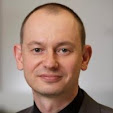
Stanislav, 28, lived in Sophia, the capital of Bulgaria; he is married to a Bulgarian woman; he is a programmer; he has been living in Montreal almost two year by the moment.
The interview was conducted at the Stanislav’s apartment in a relaxing atmosphere where two friends can drink a bit of wine and share their opinions in a free form. Some important results of this one hour dialogue are summarized below.
Being provided with my short introduction, Stanislav was very interested and excited about the Hofstede’s approach to discovering intercultural differences. He believes that the modern Bulgarian society belongs to the low power distance class. Although the Bulgarian king (tsar) came from the emigration back to the country and gained some popularity and power via democratic elections, the equality is seen as a common value. Laid aside the corruption aspect, we can say that the upward mobility is not limited due to some power or wealth factors.
The degree of individualism depends on the place where people live. Say, in the countryside people are more collectivists than in the cities. In general, Stanislav estimates this score as 50/50 saying with a smile ‘there are troubles between three Bulgarians.’
I asked him a few of very tricky questions to evaluate their society’s uncertainty avoidance: what a person would choose between calling the police and staying away if he or she were a witness of a crime; between giving a bribe and staying within the law to save a friend from prison, etc. Based on his answers, the Bulgarians tend to count on themselves more than on the police and the legal system.
It is very rare to see women among bus drivers in Bulgaria; nevertheless, women are dominant among trolleybus drivers! Little by little women become more numerous at manager positions. For example, two last Sophia’s mayors are women: Maria Boyadzhiyska, Yordanka Fandakova, the second term.
Imagining the situation when he should choose between two candidates for his own IT business, he would hire a woman because of the female way of thought that can make more profit nowadays.
Among other interesting information Stanislav explained how difficult it was to him to change his head movement when he moved to Canada: in Bulgaria nodding means shaking one’s head no.
Unfortunately, I had no time to interview his wife, Bella; otherwise, the results would have been more accurate. However, based on the Stanislav’s answers, we may consider Bulgaria as a culture with low scores in Power distance and Uncertainty avoidance, average degree of Individualism, and still high score in Masculinity.
All in all, it was an outstanding experience that enriched my interpersonal skills and gave me a reason to introspect my own Russian culture.
I selected to interview a friend of mine, which belongs to the Bulgarian Montreal community, because this culture – having the same Greek Orthodox and Eastern European cultural roots – is very similar to Russian one. On the other hand, we speak different languages and have many other differences in historical background, economic and political situations, etc. So, it is interesting to find out subtle differences in regards to the four mentioned-above criteria.
Stanislav, 28, lived in Sophia, the capital of Bulgaria; he is married to a Bulgarian woman; he is a programmer; he has been living in Montreal almost two year by the moment.
The interview was conducted at the Stanislav’s apartment in a relaxing atmosphere where two friends can drink a bit of wine and share their opinions in a free form. Some important results of this one hour dialogue are summarized below.
Being provided with my short introduction, Stanislav was very interested and excited about the Hofstede’s approach to discovering intercultural differences. He believes that the modern Bulgarian society belongs to the low power distance class. Although the Bulgarian king (tsar) came from the emigration back to the country and gained some popularity and power via democratic elections, the equality is seen as a common value. Laid aside the corruption aspect, we can say that the upward mobility is not limited due to some power or wealth factors.
The degree of individualism depends on the place where people live. Say, in the countryside people are more collectivists than in the cities. In general, Stanislav estimates this score as 50/50 saying with a smile ‘there are troubles between three Bulgarians.’
I asked him a few of very tricky questions to evaluate their society’s uncertainty avoidance: what a person would choose between calling the police and staying away if he or she were a witness of a crime; between giving a bribe and staying within the law to save a friend from prison, etc. Based on his answers, the Bulgarians tend to count on themselves more than on the police and the legal system.
It is very rare to see women among bus drivers in Bulgaria; nevertheless, women are dominant among trolleybus drivers! Little by little women become more numerous at manager positions. For example, two last Sophia’s mayors are women: Maria Boyadzhiyska, Yordanka Fandakova, the second term.
Imagining the situation when he should choose between two candidates for his own IT business, he would hire a woman because of the female way of thought that can make more profit nowadays.
Among other interesting information Stanislav explained how difficult it was to him to change his head movement when he moved to Canada: in Bulgaria nodding means shaking one’s head no.
Unfortunately, I had no time to interview his wife, Bella; otherwise, the results would have been more accurate. However, based on the Stanislav’s answers, we may consider Bulgaria as a culture with low scores in Power distance and Uncertainty avoidance, average degree of Individualism, and still high score in Masculinity.
All in all, it was an outstanding experience that enriched my interpersonal skills and gave me a reason to introspect my own Russian culture.